

Precise navigation in GPS denied or contested environments is critical. Discover how electronic protection counters jamming and spoofing to ensure mission success.
Tech Articles
5 September 2025
Go to Article
Are Autonomous Haulage Stoppages Frustrating You?
Discover how Advanced Navigation’s INS can maximize uptime and secure your autonomous haulage investment.
15 August 2025
Go to Article
Hybrid Navigation System: Mitigating Drift in Underground Mining with an INS + LVS
Discover how combining an INS with a Laser Velocity Sensor reduced positional drift to sub-0.1% during Advanced Navigation’s product demonstration in Europe’s deepest mine.
11 August 2025
Go to Article
Why It’s Time to Rethink Our Reliance on GPS
GPS is arguably one of the most powerful and transformative technologies of the modern era. What happens when it stops working?
20 May 2025
Go to Article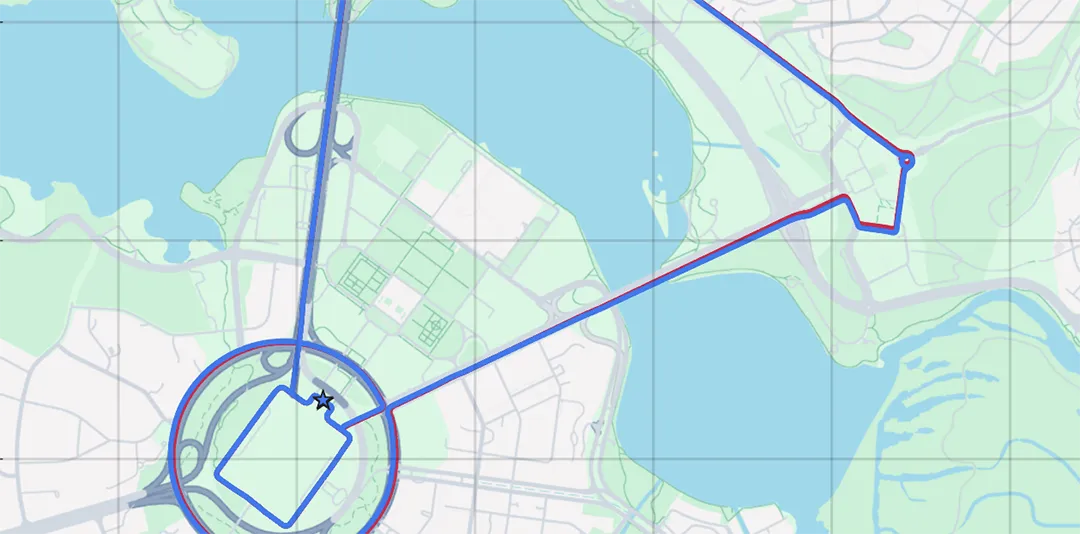
Laser Velocity Sensor (LVS): A High-Accuracy Velocity Aid for GNSS-Denied Navigation
The Laser Velocity Sensor (LVS) is a new class of navigation technology developed by Advanced Navigation that uses infrared (IR) lasers to measure a vehicle’s ground-relative 3D velocity with extraordinary accuracy and precision.
30 March 2025
Go to Article
Inertial Navigation: Empowering Armored Combat Vehicles in GNSS-Denied Environments
With low-cost GPS jamming and spoofing technologies becoming widely available, relying solely on GPS for navigation has become an increasingly risky option for armored combat vehicles. Despite the dangers, many defense fleets around the world remain ill-equipped to navigate effectively through contested environments where GPS is compromised.
3 September 2024
Go to Article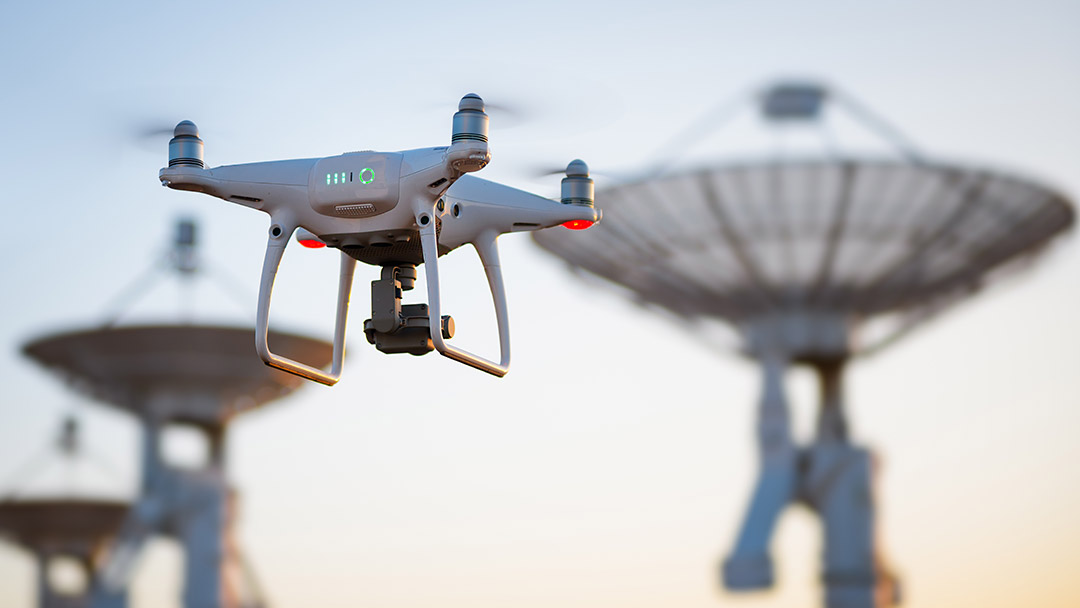
Student Grant Program Winner Goes to Satellite-Powered Autonomous Drone System
Advanced Navigation recently concluded its 2023-24 Student Grant Program. The Program is designed to motivate and financially support high-achieving engineering students with their studies and career development. This year, we asked applicants to envision an autonomous system that would improve human lives.
5 August 2024
Go to Article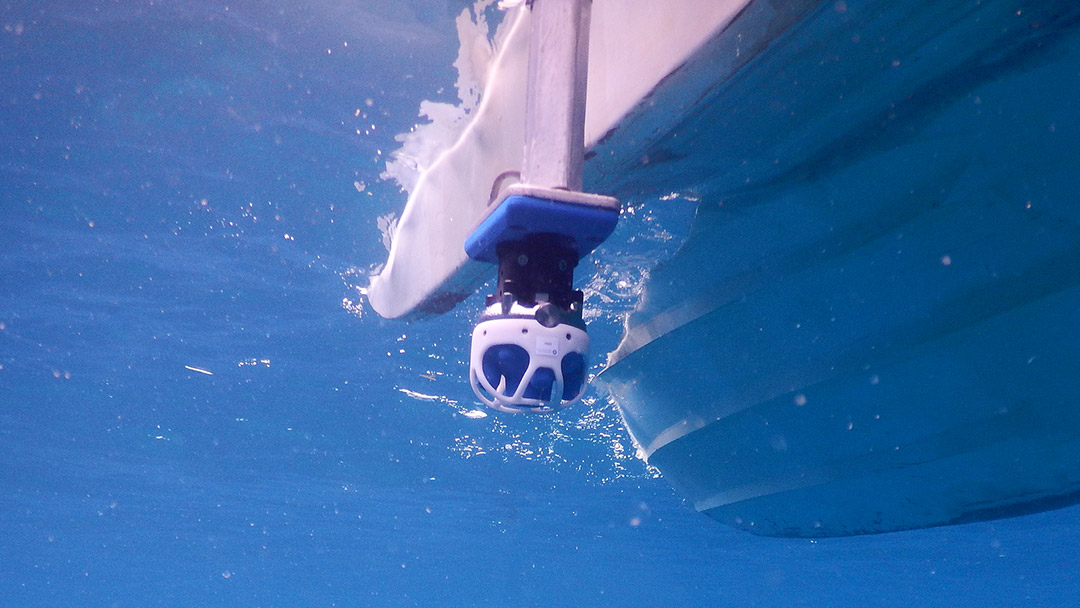
Subsonus Acoustic Compass for Underwater Exploration
Maritime intelligence is required for a variety of reasons, including underwater infrastructure inspections and environmental monitoring, and its significance is only increasing.
19 June 2024
Go to Article
Digitally Encoded Doppler Ranging and Velocity – A New Paradigm in Laser Based Measurement
Advanced Navigation’s light detection altimetry and velocimetry (LiDAV) system sets a new benchmark for laser-based distance/range and velocity measurement. This patent pending technology delivers a navigational sensor capable of measuring distance and velocity with extreme accuracy and with less hardware than any other system with similar characteristics.
25 May 2024
Go to Article
Integrating Inertial Navigation Systems: What to Know
As the use of autonomous systems continues to grow, the importance of their ease of integration cannot be overstated. This refers to how seamlessly a system can be integrated into a vehicle or platform, both physically and electronically.
3 January 2024
Go to Article