

The measurement of motion, specifically, acceleration, rotation and velocity, is essential to understanding the orientation of an object. It is also broadly applicable to many applications; for example, production line machines, robotic devices, vehicles, autonomous systems, gimbals, machine tools, and even robotic prosthetics.
Tech Articles
13 February 2023
Go to Article
Inertial Guidance: A Brief History and Overview
The limitation of most navigation systems is the need for references to confirm actual position with estimated position, be it a map, a star, a satellite constellation, or a landmark. When a reference is not available, we require a different means of maintaining navigation and guidance. Using inertia as a means of detecting and measuring changes in motion has been a popular method of unaided navigation.
4 January 2023
Go to Article
The Future of the Next Frontier with the Australian Space Agency
With support from the Australian Space Agency, Advanced Navigation has developed Boreas X90, an inertial navigation system to autonomously explore the Moon and beyond to Mars, to help uncover scientific discoveries, unlock the lunar economy and inspire a new generation of space explorers.
2 November 2022
Go to Article
Benefits of Using Post-Processing Kinematic (PPK) Software in GNSS Based and Inertial Navigation Solutions
Kinematics is the study purely of the motion of objects, without concern for the forces involved causing the motion. In a navigational sense, kinematics is a bit different to the definition above. We are still wanting to gain motion information for a moving object, but the context here is to establish the true path (or as close to the truth as we can get) of the object in relation to an absolute position on the surface of the Earth.
17 October 2022
Go to Article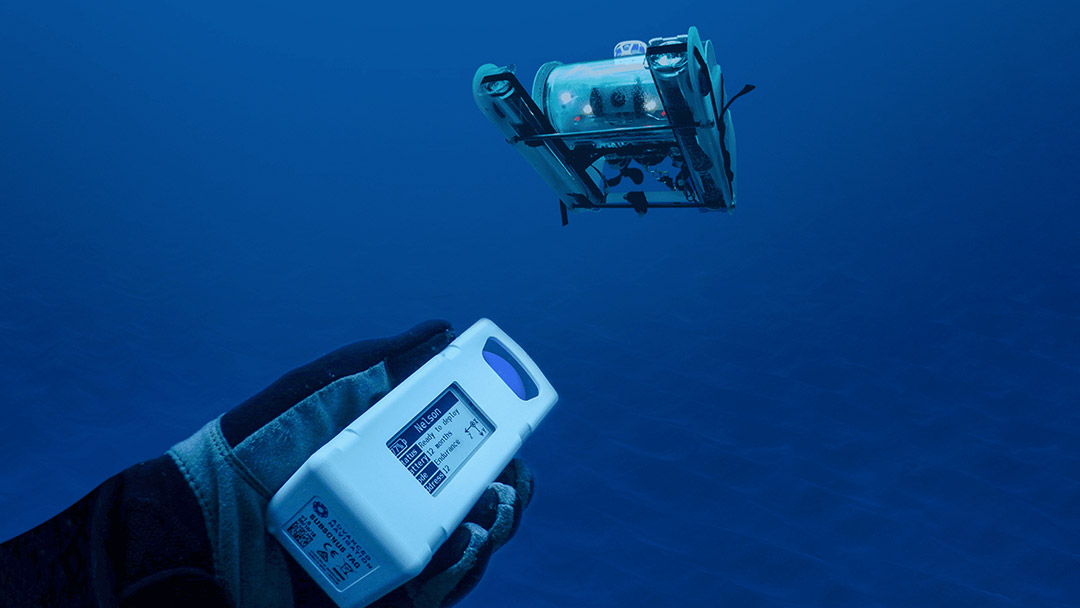
Acoustic Positioning and Navigation – An Introduction
Acoustic signaling is a method of using sound as a means of wireless underwater communications. Acoustics are used because radio waves, light waves and satellite signals cannot travel through water for any useful distance because of signal attenuation (reduction in amplitude) due to water density.
8 September 2022
Go to Article
The Future of Inertial Navigation is Classical-Quantum Sensor Fusion
Inertial navigation using quantum sensor technology is a new field of research and development that can completely revolutionize navigation systems. This novel technology increases inertial measurement accuracy by orders of magnitude over current benchmarks. This can enable absolutely reliable inertial navigation systems (INS) that can operate entirely standalone and retain accuracy over the course of years rather than months using current technology.
25 August 2022
Go to Article
Dead Reckoning for GNSS Denied Scenarios – An Introduction
Dead-reckoning is a term coined in the 1600s by ship navigators to estimate course and distance when no landmarks or stars could be seen. Using velocity, a compass and the directional effects of current and wind, ship navigators could plot or estimate a course with a reasonable degree of accuracy for the time, especially over short distances.
17 August 2022
Go to Article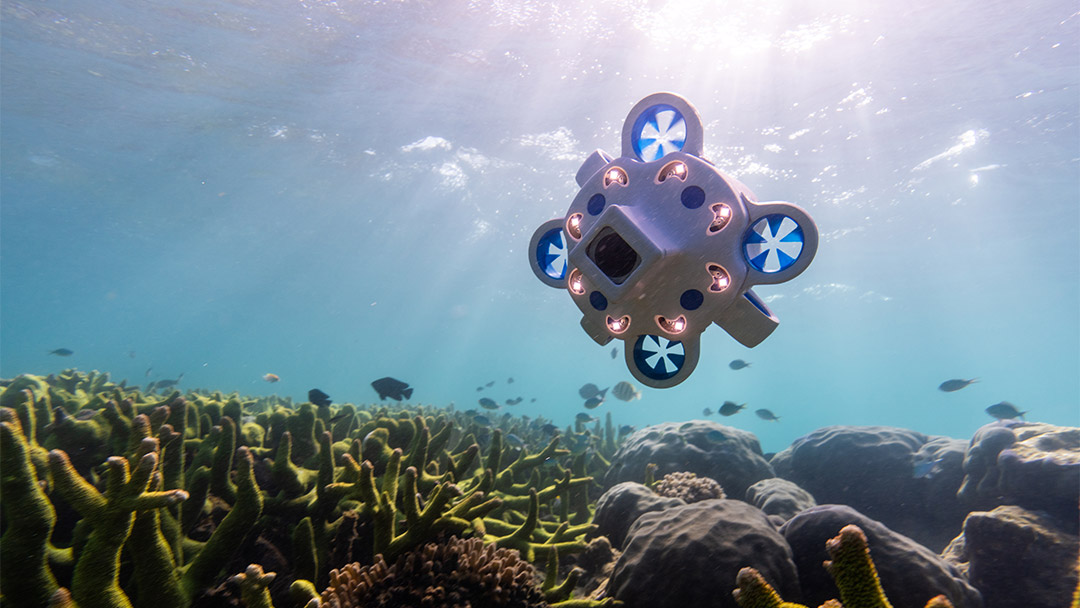
The Benefits of Hydrus Micro Hovering AUV Explained
Peter Baker of Advanced Navigation shares some insights into the development and technology behind Hydrus – a micro hovering autonomous underwater vehicle (micro hovering AUV) that is revolutionizing the underwater drone industry.
8 June 2022
Go to Article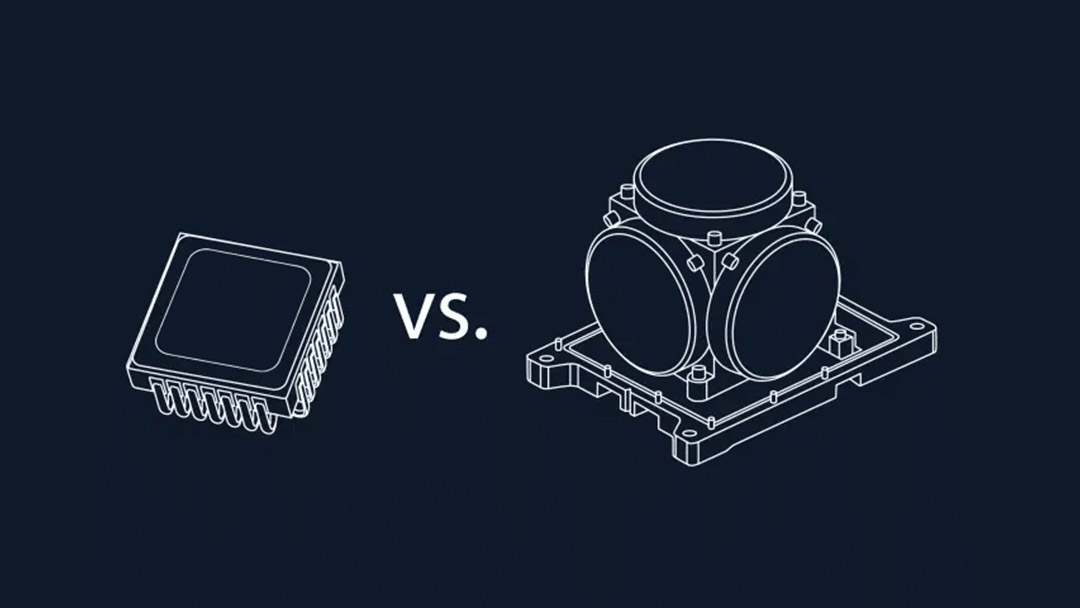
MEMS VS FOG: What Inertial System Should You Choose?
MEMS vs FOG: the Ring laser gyroscope (RLG) has dominated the inertial navigation market since its first inception in 1963, recently its dominance has been challenged by improvements to Fibre Optic Gyroscope (FOG) technology. These technological improvements are slowly but surely eroding the RLG’s place in the inertial navigation market, pushing the aging technology to irrelevance.
10 February 2022
Go to Article
Methods of Heading in Navigation
There are several methods to determine heading in navigation when using an Attitude Heading Reference System (AHRS) or an Inertial Navigation System (INS). As such recommending an appropriate heading source should be based on typical application requirements. These are indicative but should be evaluated fully for individual applications.
18 September 2021
Go to Article