
Aiding & External Sensors
Constrain INS integration drift, stabilize vertical channels, and maintain precise dead reckoning in GNSS-denied environments.
Enquire Now
Aiding Solutions
Explore our field-proven aiding solutions engineered for increasing accuracy over extended distances in GNSS-denied environments.
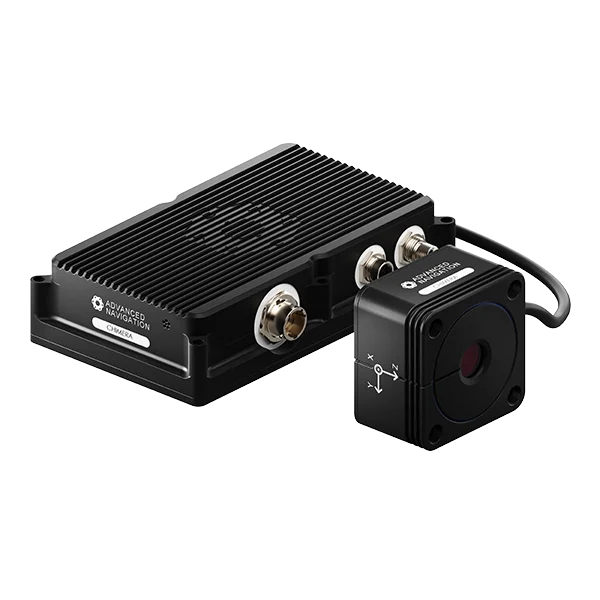
Provides highly accurate 3D body velocity updates directly to our INS navigation filter
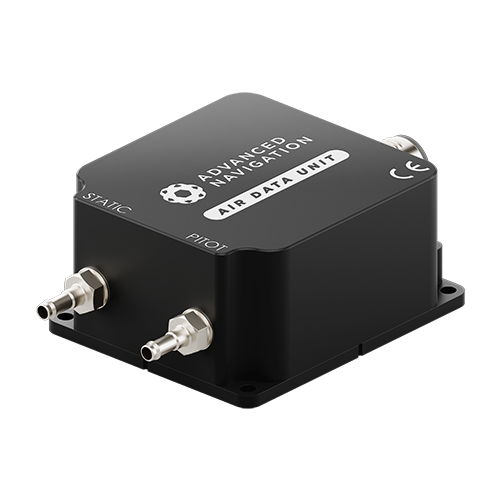
Measures pitot airspeed and barometric altitude in fixed-wing aircraft
Technical Validation
Velocity Capping
Standalone INS positional error grows exponentially over time. Integrating an external aiding device caps the velocity error, reducing drift growth to remain linear and manageable.
Low SWaP-C Solution
Pairing a compact, low-power navigation system with an external aiding system delivers a more robust and reliable solution compared to existing navigation solutions on today’s market.
Unified Software Protocol
All proprietary aiding devices share a unified software protocol. They interface seamlessly with core units like Certus or Boreas without requiring host firmware overrides.
FAQs
Why should I pair a Laser Velocity Sensor such as Chimera Land with an INS instead of a standard wheel encoder?
Wheel encoders are vulnerable to slip, skid, and changes in tire pressure. Chimera Land uses optical laser tracking directly against the terrain, completely bypassing mechanical slip errors.
How do aiding devices improve system alignment timelines?
Standalone INS hardware often requires 5 to 15 minutes of stationary alignment to calculate initial orientation. Aiding devices provide instant position or magnetic baselines, allowing for significantly faster in-motion initialization.
Is the Air Data Unit 2.0 suitable for vertical take-off and landing (VTOL) aircraft?
No. The ADU 2.0 requires minimum forward airspeeds to operate (ranging from 8 m/s to 25 m/s depending on configuration) and is designed specifically for fixed-wing applications.