

How Does Electronic Protection Enable Navigation in GPS Denied or Contested Environments?
Share:
Published on:
Article Summary
The Challenge: Hostile ECMs deny access to GPS, causing failures in GPS-dependent systems essential for modern defense operations.
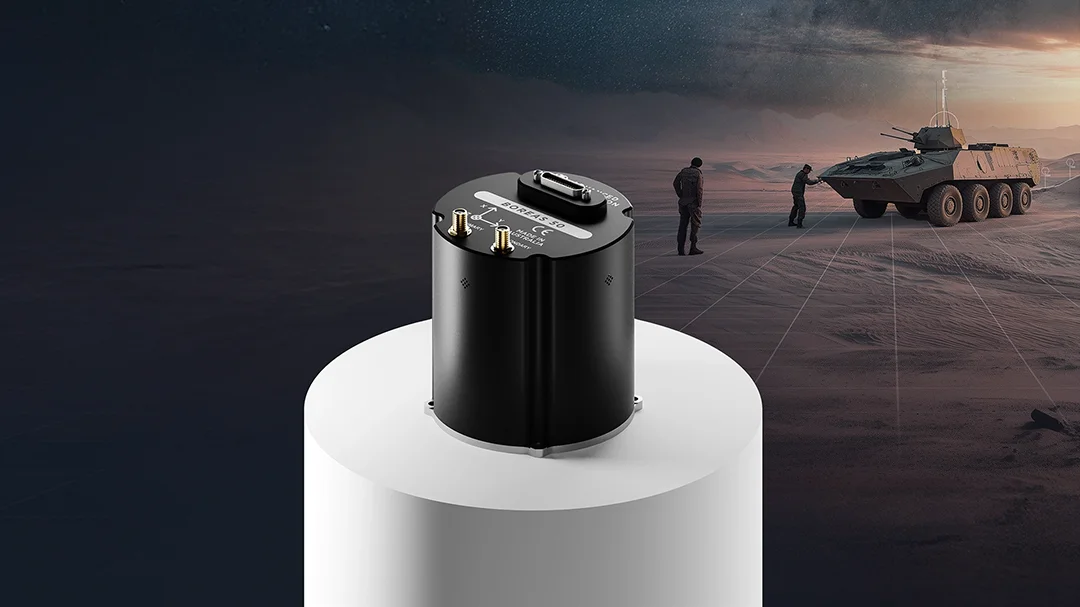
The Solution: Advanced Navigation’s Boreas D50 is an ITAR-free, low SWaP-C inertial navigation system with electronic protection capabilities that delivers resilient PNT.
The Outcome: Defense forces can maintain continuous and precise PNT to ensure mission continuity, even in the most severe GPS-contested environments.
Electronic warfare has rendered any complete reliance on GPS as obsolete.
Adversarial electronic attacks are no longer limited to brute-force jamming. Today, they are sophisticated, multi-layered assaults designed to create believable but false navigational guidance. For mission success in a contested environment, a simple anti-jam antenna is not enough.
Defense forces require a resilient PNT solution architected with the capability to detect and reject spoofing, whilst delivering precision navigation in GPS denied or GPS contested environments when it counts.
Electronic protection, formerly known as electronic counter-countermeasures (ECCM), exists to provide precision in that chaos. Electronic protection is an integrated set of capabilities designed to provide a multi-layered defense. The primary goal is to ensure the defense vehicle or platform can continue its mission despite operating in a hostile electromagnetic environment.
For you, the practical question is not whether electronic protection matters, but how to judge whether a proposed technology solution will actually hold position and attitude within acceptable error bounds when it counts, without compromising on SWaP-C or stalling integration.
Don’t Let Jamming Blind Your Fleet
Achieve Assured PNT with Electronic Protection that outpaces the threat. Download our report to see how our Electronic Protection can de-risk your next defense program.
Download the report

Building an Electronic Protection Solution
Modern electronic warfare demands a multi-layered, “defense-in-depth” architecture that preserves navigational precision across the entire signal processing chain.
An effective, electronic protection navigation system must integrate three critical capabilities:
- Robust RF front-end: This involves using multi-band GNSS receivers to maximize satellite visibility and advanced anti-spoofing and anti-jamming filtering techniques to mitigate the impact of brute-force electronic attacks before they can corrupt the signal.
- Intelligent signal monitoring: Beyond simple jamming, the system must actively detect and reject sophisticated deception attacks. This requires real-time spoofing detection that constantly monitors signal integrity, cross-check satellite data, and identify anomalies inconsistent with genuine GNSS transmissions.
- A high-performance inertial core: The source of precision is a coupled inertial navigation system (INS) and a Fiber-Optic Gyroscope (FOG) for an independent, high-integrity source of position and attitude data. When the system detects jamming or spoofing, a sophisticated sensor fusion can reject the corrupted GNSS measurements and rely on this inertial holdover to bridge gaps in coverage and maintain precision until reliable signals return, ensuring continuous navigation in GPS denied or contested environments.
How Does Advanced Navigation Deliver Electronic Protection?
At Advanced Navigation, we address the challenges of electronic warfare by engineering solutions built on three core pillars that translate into decisive outcomes.
Resilience and Mission Continuity
Navigational resilience is about both resisting and maintaining precise PNT throughout an attack.
Our new Boreas D50 is a strategic-grade INS solution for precise navigation in GPS-contested environments, enabling your defense forces to overcome the threats of ECM. Its north-seeking capability determines true north using the Earth’s rotation within minutes, compensating the need for GPS, magnetic compasses, or external reference points. Our advancements in sensor fusion leverages reliable data from the FOG and accelerometers, ensuring a navigation solution that maintains exceptional accuracy during extended inertial holdover periods when GPS is completely denied.
Where the D50 stands apart is its multi-band GNSS receiver that increases satellite visibility for faster acquisition and more stable positioning in contested environments. This is combined with an option for anti-jamming and anti-spoofing capabilities for electronic protection that actively filter RF interferences and validates satellite data in real-time to reject spoofing attacks.
Low SWaP-C
Advanced electronic protection capabilities are redundant if they cannot be deployed where they are needed.
For defense leaders who need to command precision in compact form, the Boreas D50 offers an industry-leading SWaP-C when compared to competing systems of similar performance. This allows for an ease of integration on almost any platform, new or legacy, without requiring costly modifications or sacrificing other critical payloads.
Agnostic Integration
A leading technical solution can still fail if it is trapped in a lengthy and expensive integration process. We know that your program success is often measured by fielding capability, not necessarily by engineering development. Our systems are engineered with an agnostic philosophy to avoid proprietary lock-in and simplify integration across your assets.
The Boreas D50 features a full range of interfaces (Ethernet, CAN, RS232/RS422) and protocols (NMEA0183, CANopen, NTP, PTP), which drastically reduces integration time and risk. This built-in flexibility allows your team to connect to virtually any new or legacy platform without the need for costly custom development.
Why Choose Advanced Navigation as a Defense Partner?
A resilient PNT solution is a comprehensive capability that supports defense organisations from development to deployment. Beyond the product capabilities, Advanced Navigation delivers a partner-worthy solution by providing:

Responsive Production and Delivery
You know that long acquisition cycles are a liability. An electronic warfare (EW) countermeasure that takes years to field may be obsolete upon arrival. Our vertically-integrated manufacturing delivers technology in weeks or months, not years, enabling you to retrofit existing systems or integrate into new platform designs with reliability.
In-Field Expertise
Deploying technology into the demanding conditions of real-world operations requires more than just a datasheet and a packing slip. It requires a responsive partnership with expert support who understands the operational context and is committed to ensuring the system performs as promised. At Advanced Navigation, our support model is built on providing direct access to genuine expertise with our team of experienced engineers. We see our role as an extension of your technical team, ensuring success from initial integration to post-mission analysis.
ITAR-Free
All products at Advanced Navigation are ITAR-free. This eliminates US export license requirements, drastically reducing acquisition timelines and logistical friction. It provides you with a direct path to acquire defense technology, ensuring operational independence and simplifying interoperability across multinational forces.
Fortifying Your Electronic Protection Capabilities
The decisive factor in selecting an electronic protection solution is its ability to deliver tangible battlefield outcomes.
Advanced Navigation empowers you to defend your down-select not with datasheets, but with undeniable operational advantages including an INS with electronic protection capabilities, low SWaP-C that enhances your overall system performance, and delivers a rapid, low-risk integration.
Request a technical demonstration or evaluation kit and prove the capability on your own platform.
FAQs
What is Electronic Protection?
Electronic protection, formerly known as electronic counter-countermeasures (ECCM), are the protective designs and operating techniques that defend navigation systems so they keep working in a contested electromagnetic environment. The focus is survivability and resilience, preserving access to the spectrum and the integrity/continuity of signals in the face of jamming and deception.
Why is Electronic Protection important?
Electronic warfare has been a persistent and escalating technological arms race between countermeasures and counter-countermeasures. For every new method of attack (ECM), a new method of defense (electronic protection) is developed, which in turn drives the development of more advanced ECM. This dynamic cycle began in the earliest days of electronic conflict and continues unabated.
What is GPS jamming?
GPS jamming is the intentional act of using a radio frequency transmitter to block or interfere with the weak signals broadcast by GPS satellites. This interference prevents a GPS receiver from acquiring satellite signals and computing its PNT information. To overcome this threat, advanced systems utilize electronic protection to help the receiver endure against the disruptive jamming noise and maintain its function.
What is GPS spoofing?
GPS spoofing is a form of electronic warfare that transmits counterfeit satellite signals so a receiver computes a believable but wrong position, time, or velocity, often drifting it away and off-course. Electronic protection matters here because it layers defenses that detect and reject forged signals, limit an attacker’s leverage at the antenna and RF chain, and maintain precision with inertial holdover and rapid, stable reacquisition once authentic signals return.
Recent Tech Articles

Choosing the Right Navigation for Autonomy in Mining
Discover how Advanced Navigation’s Certus and Certus Evo GNSS/INS solutions improve fleet management and scale autonomy in mining.
29 September 2026
Go to Article
Surviving GNSS Denial: Free Inertial vs. Dead Reckoning Navigation
Learn what dead reckoning is in navigation and how it compares to free inertial mode for UGVs and UAVs operating during prolonged GNSS outages.
14 September 2026
Go to Article