
Demonstrating Sub-0.1% Navigation Error in Underground Mining with BHP
Share:
Published on:
Background
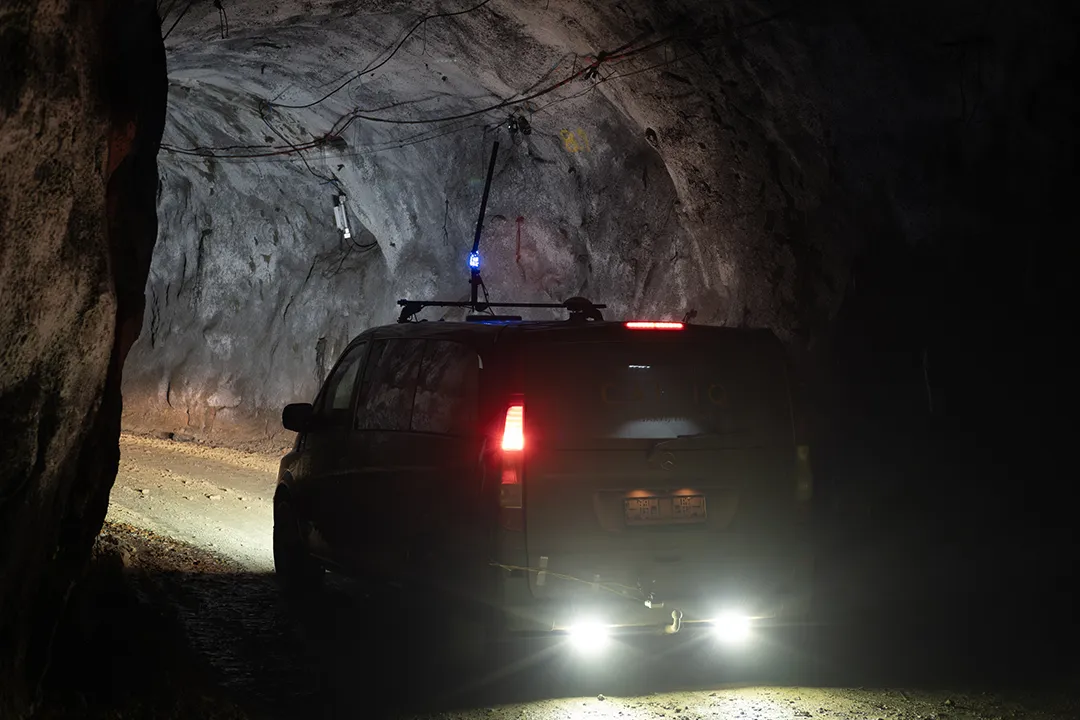
Advanced Navigation’s Boreas and Chimera Land hybrid navigation system was evaluated at the Callio Mine in Pyhäjärvi, Finland, Europe’s deepest underground base metal mine, as part of BHP’s Deep Mining Challenge. The trials aimed to demonstrate long-range, real-time vehicle navigation in a deep, highly complex, and entirely GNSS-denied environment.
Challenge
Reliable navigation in underground mining is severely hindered by the complete absence of GNSS. Alternative positioning methods typically require extensive, costly fixed infrastructure that is difficult to maintain in harsh conditions, while legacy systems suffer from unresolved compounding positional drift over time. The challenge was to deliver accurate, resilient, vehicle-based positioning to enable efficient fleet management and autonomous operations deep underground without relying on external infrastructure.
Solution
Advanced Navigation successfully demonstrated a vehicle-based hybrid navigation system approach that tightly integrated inertial and laser velocity sensors to move beyond the need for external references. The key components include:
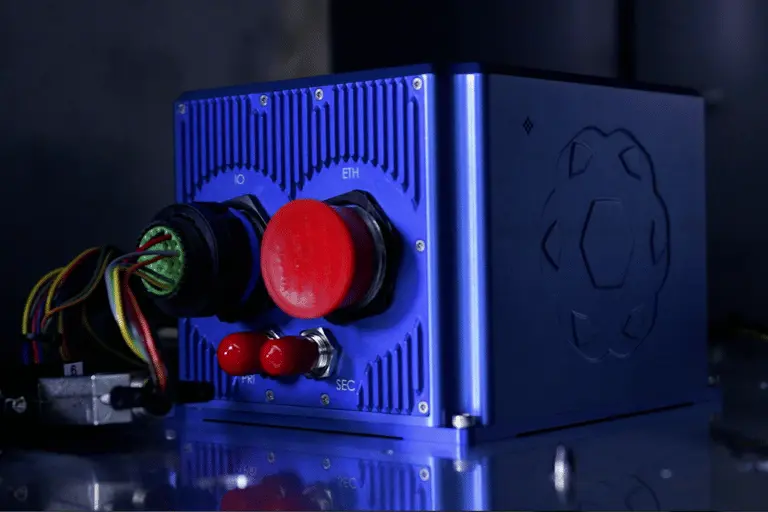
- Boreas D90: A high-performance, Fiber-Optic Gyroscope Inertial Navigation System (INS) that served as the core of the system, continuously calculating position, velocity, and orientation without GNSS.
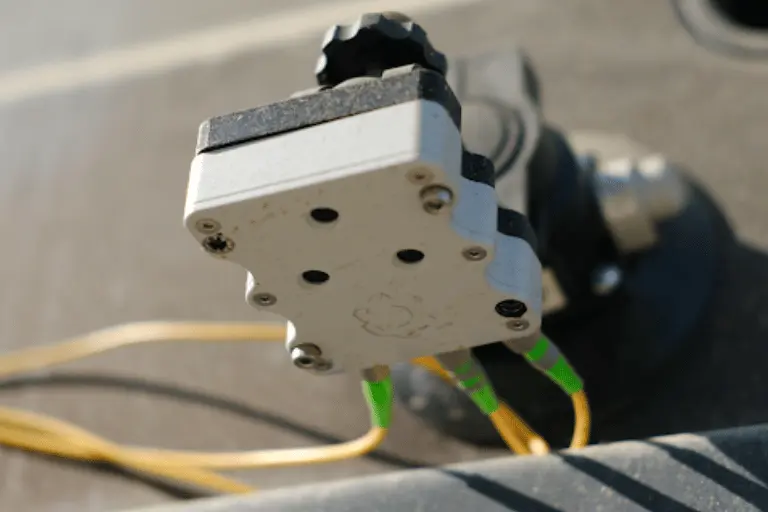
- Chimera Land: A precision aiding sensor that provided highly accurate 3D body velocity updates directly to our INS navigation filter, bypassing inaccuracies inherent in mechanical odometry.
- AdNav Intelligence: Advanced Navigation’s software-defined sensor fusion architecture that blends inertial data with multiple aiding technologies in real time.
Outcome
The deployment successfully validated the Chimera Land and Boreas hybrid navigation system as a highly accurate, resilient solution for underground navigation. Validation was conducted on a vehicle navigating unmapped, complex tunnel networks down to 1400 meters in depth, yielding the following dead-reckoning accuracy results:
- Deep Mine Traverse (1400m Depth) Achieved accuracy with a 0.070% error per distance traveled (15.98m over 22.92km).
- Mid-Level Traverse (400m Depth) Delivered reliable dead-reckoning performance with a 0.009% error per distance traveled (0.55m over 6km).
“At Normet, we specialise in advanced solutions for underground mining and tunnelling, so we know firsthand how difficult accurate and reliable navigation can be in these environments. Seeing Advanced Navigation’s Hybrid Navigation System deliver consistent positioning with minimal infrastructure deep within the Pyhäsalmi Mine was remarkable. It’s a powerful step forward for automation and safety in the underground space.”
Olli Mylläri, Vice President Technology at Normet
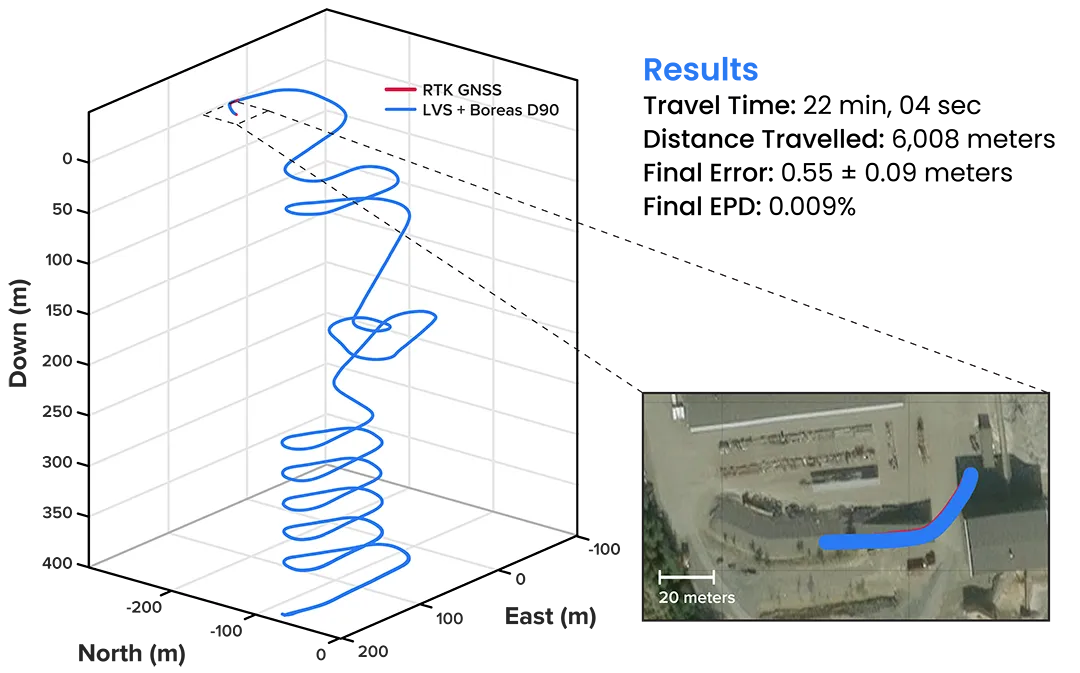
3D navigation trace of run 2 of the repeat surface-to-surface 400m depth tests. This particular run covered 6008 m, with a measured error of 0.55 ±0.09 m for 0.009% error per distance travelled.
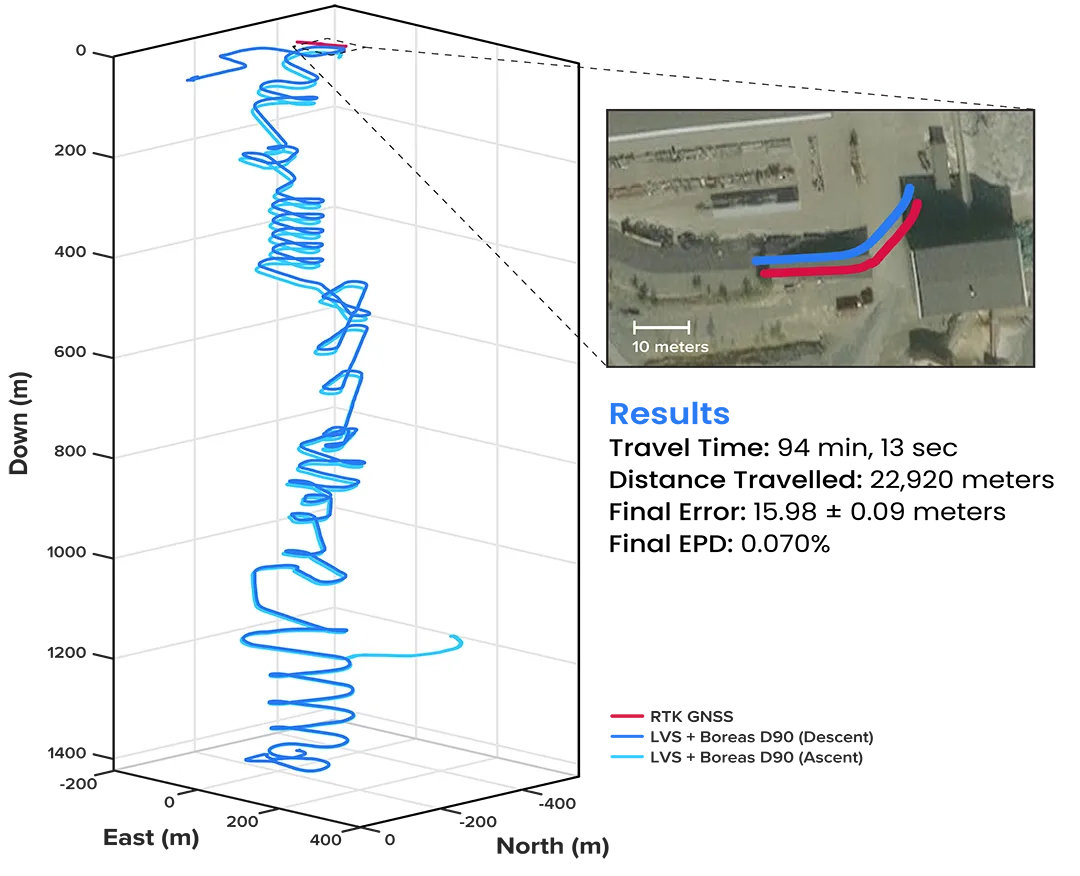
3D navigation trace of the run down to 1400 m depth. The test traversed a total distance of 22920 m, with a measured final error of 15.98 ±0.09 m yielding an error per distance travelled of 0.070%.
The descent and ascent paths are coloured differently for disambiguation. During the ascent (light blue), the driver entered a side tunnel at a depth of approximately 1200 m which was not traversed on the descent.
These results demonstrated that Advanced Navigation’s sensor fusion approach can successfully move beyond the reliance on fixed infrastructure, providing the high-precision navigation necessary for underground environments.
“We were thoroughly impressed by the results the sensor fusion provided. I have been exposed to these sorts of sensors in other projects, and nothing has come close to this level of performance. It’s clear the Laser Velocity Sensor is a major key in providing these outstanding results.”
Magnus Zetterberg, Senior Consultant, Combitech
For a deeper technology dive into the demonstration at the Callio Mine in Pyhäjärvi, Finland, read our technical article here.